
The Brain and Yoga: The Anatomy Most Yoga Practitioners Never Study

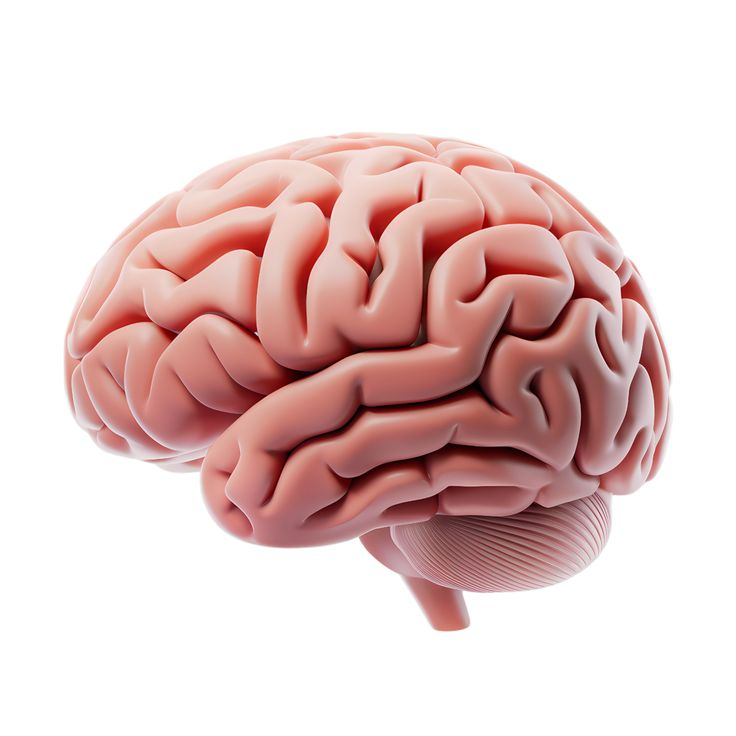
When yoga students begin studying anatomy, their attention is usually directed toward muscles, bones, joints, and movement.
They learn the actions of the hamstrings in a forward bend, the role of the gluteal muscles in standing postures, and the anatomy of the shoulder in arm balances.
These topics are important.
Yet there is one structure involved in every yoga practice that often receives far less attention than it deserves:
The brain.
Without the brain, there is no movement, no balance, no breathing regulation, no body awareness, and no meditation.
Every posture, every breath, and every moment of awareness begins and ends with the nervous system.
To truly understand yoga anatomy, we must look beyond muscles and explore the organ that coordinates them all.
Movement Begins in the Brain, Not the Muscles
A common misconception is that muscles create movement.
In reality, muscles only contract when instructed to do so by the nervous system.
Before you raise your arm in Virabhadrasana, step into Trikonasana, or transition into Adho Mukha Svanasana, your brain has already planned and initiated the movement.
The muscles execute the action.
The brain directs it.
This distinction is important because yoga is not merely strengthening muscles—it is refining communication between the brain and the body.
Every repetition of a posture is also a repetition of a neurological pattern.
Why Balance Postures Are Brain Training
Consider Vrikshasana (Tree Pose).
At first glance, it appears to be a simple standing balance.
Yet beneath the surface, an extraordinary amount of neurological activity is taking place.
To remain upright, the brain continuously processes information from:
• The eyes
• The inner ear (vestibular system)
• Muscles and tendons
• Joints and connective tissues
These systems provide constant feedback regarding body position and movement.
The brain integrates this information and makes hundreds of subtle adjustments each minute to maintain balance.
This is why balance postures are not merely exercises for the legs.
They are exercises for the nervous system.
Proprioception: The Hidden Sense
Most people are familiar with the five traditional senses.
Few have heard of proprioception.
Proprioception is the body's ability to sense its own position in space.
It allows you to touch your nose with your eyes closed.
It tells you where your foot is during a walking meditation.
It helps you understand the position of your spine in Tadasana without looking in a mirror.
Yoga constantly challenges and refines this system.
Each posture provides information to the brain about alignment, movement, pressure, tension, and position.
Over time, many practitioners develop greater body awareness not because their muscles change dramatically, but because their nervous system becomes more skilled at interpreting sensory information.
The Brain's Role in Flexibility
Many people assume flexibility is determined solely by muscle length.
The reality is more complex.
The nervous system plays a significant role in determining range of motion.
Muscles contain sensory receptors that continuously communicate with the brain regarding stretch, tension, and safety.
When the brain perceives excessive threat or instability, it may limit movement as a protective mechanism.
When movement is gradual, controlled, and perceived as safe, the nervous system may permit a greater range of motion.
In this sense, flexibility is not only a property of tissues.
It is also a conversation between the body and the brain.
Breath: A Direct Link to the Nervous System
One reason pranayama occupies such an important place in yoga is that breathing is uniquely connected to the nervous system.
Most physiological processes occur outside conscious awareness.
We cannot voluntarily regulate digestion or immune activity directly.
Breathing is different.
We can consciously alter its rhythm, depth, and pattern.
This creates a unique bridge between voluntary and involuntary processes.
Through breathing practices, yoga provides a practical way of influencing physiological states associated with stress, relaxation, attention, and emotional regulation.
From an anatomical perspective, pranayama is not merely a respiratory exercise.
It is an interaction with the nervous system.
Meditation and the Brain
Meditation is often described as a spiritual practice, but it is also a neurological one.
When attention repeatedly returns to the breath, a mantra, or present-moment awareness, specific neural pathways are being engaged again and again.
Much like muscles adapt to repeated use, the brain changes in response to repeated experiences.
This ability is known as neuroplasticity.
Every meditation session is therefore not merely an exercise in relaxation but also an exercise in training attention, awareness, and mental habits.
Why This Matters for Yoga Students
Understanding the role of the brain changes how we view yoga.
A posture is no longer just a stretch.
A balance pose is no longer just a challenge of strength.
A breathing practice is no longer just an exercise for the lungs.
Each becomes an opportunity to understand the remarkable relationship between the nervous system and the body.
The deeper we study anatomy, the more apparent it becomes that yoga is not simply a practice of muscles and joints.
It is a practice of communication between the brain, the body, the breath, and awareness itself.
Final Thoughts
The next time you step onto your mat, remember that the most important structure involved in your practice may not be your hamstrings, shoulders, hips, or spine.
It is the three-pound organ quietly coordinating every movement, sensation, thought, and breath.
To study yoga anatomy is not merely to study muscles.
It is to study the extraordinary partnership between the body and the brain.
Because every posture begins long before the muscles move.
It begins in the nervous system.
— Dhanashree Gonjare
Yoga with Dhanashree ✨


Comments